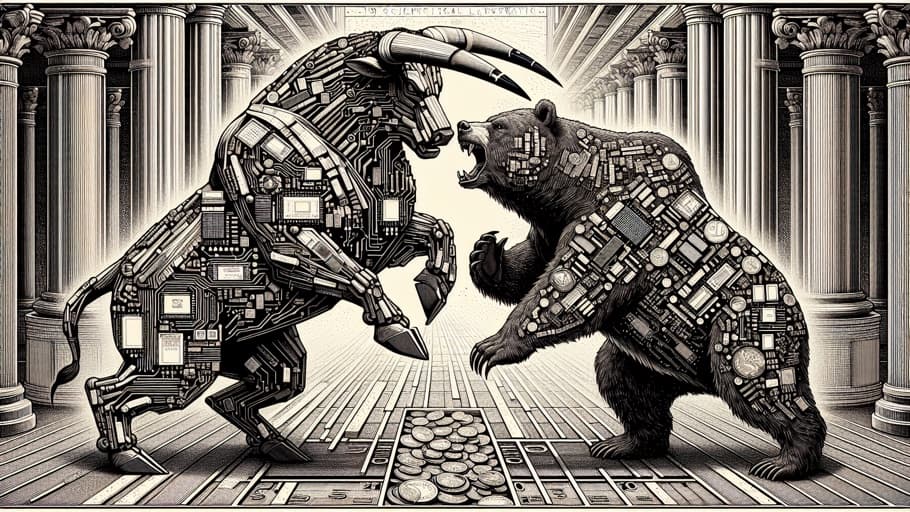
Bitcoin Isn't Digital Gold Anymore. It's a Tech Stock With an Identity Crisis.
Grayscale just said what most people have been thinking. Bitcoin does not trade like gold. It trades like a beaten down software stock. And honestly? The data backs them up.
BTC is sitting around $68,300 this morning, stuck in a range that has got traders confused and sentiment indicators flashing red. The Fear and Greed Index hit 43. That is fear territory. Not panic, not greed. Just quiet, grinding uncertainty.
So what is actually happening here?
The Bounce That Was Not
Last week was ugly. Bitcoin slid into the low $60,000s in what felt like a capitulation flush. People sold hard and fast. Then it bounced to $70,000 over the weekend, and for about 48 hours, Crypto Twitter pretended everything was fine.
It was not fine. The bounce stalled at $71,000, and we have been drifting lower since.
Related Articles

Bitcoin's $8.7 Billion Purge: Capitulation or Just the Beginning?
Bitcoin clawed its way back above $70,000 this week. And honestly, it doesn't feel like a victory. The numbers tell a brutal story. $8.7 billion in realized losses over the past week. That's the second largest weekly loss event in bitcoin's history, trailing only the catastrophic unwinding of Three Arrows Capital back in 2022. Bitcoin treasury firms were sitting on $21 billion in unrealized losses at the low point. Let that number sit with you for a second. Yet here we are, watching BTC bounce

Bitcoin's Rally Is Broken. But Is the Bottom Already In?
The crypto Fear and Greed Index just hit 5. That's not a typo. Five. We haven't seen numbers that low since the 2022 crypto winter, and before that, the COVID crash of March 2020. Bitcoin is trading around $67,800 as I write this. It's down roughly 45% from its October highs. And if you've been watching the charts, you know it's about to post its fourth consecutive red week. So let's talk about what's actually happening here. Because the news isn't all bad. In fact, some of it is really good.

Bitcoin's $60K Crash Wasn't Random. Here's Who Actually Caused It.
Last week, Bitcoin fell off a cliff. From $77,000 to $60,000 in three days. Billions evaporated. Twitter was full of "I told you so" posts and panic threads. But most people missed what actually happened. This wasn't just selling pressure from scared retail traders. The crash had invisible architects. And understanding who they are changes how you think about what happens next. THE INVISIBLE HANDS When Bitcoin dropped below $75,000 on Tuesday, something mechanical kicked in. Options market m