Bitcoin's Worst Start to a Year Ever. Here's Why Miners Don't Care.
Fifty days into 2026 and bitcoin is down 23%. That's the worst start to any year in its history. January dropped 10%. February's added another 15%. We've never seen back to back monthly declines like this in Q1 before.
And yet, something weird is happening underground.
Mining difficulty just jumped 15%. That's the biggest single increase since 2021, when China kicked every miner out of the country. The network hashrate has recovered to 1 ZH/s after dropping to 826 EH/s during that brutal winter storm that knocked U.S. operations offline. Miners are coming back hard, even as the price sits 47% below October's all time high of $126,500.
So what gives? Why are miners throwing more compute at a network while the asset they're mining keeps bleeding?
THE NUMBERS TELL A SPLIT STORY
Bitcoin's trading around $67,100 as I write this. The Fear and Greed Index sits at 53. Neutral. Not panicking, not celebrating. ETH is flat at $1,945, barely clinging to that $2,000 psychological level. SOL's at $83, up about 3% on the day.
But the real story is in the ETF flows. U.S. spot bitcoin ETFs have hemorrhaged 100,300 BTC since October. That's $6.8 billion walking out the door. The average ETF investor is now sitting on a 20% paper loss. Wintermute traders are warning that if prices slide any further, we could see capitulation selling from retail holders who bought the top.
Options markets tell a similar story. There's what traders call a "panic premium" on short term puts. The one week 25 delta skew hit 17%. People are paying up for crash protection even while the price bounces. That's the kind of behavior you see near bottoms, but it's also the kind that can become self fulfilling if enough people get spooked at once.
MINERS ARE BETTING ON SOMETHING BIGGER
Most people miss this about mining difficulty. It doesn't care about price. It cares about hashrate. And hashrate cares about one thing: whether miners think it's worth plugging in their machines.
Difficulty jumping 15% means miners are overwhelmingly saying yes.
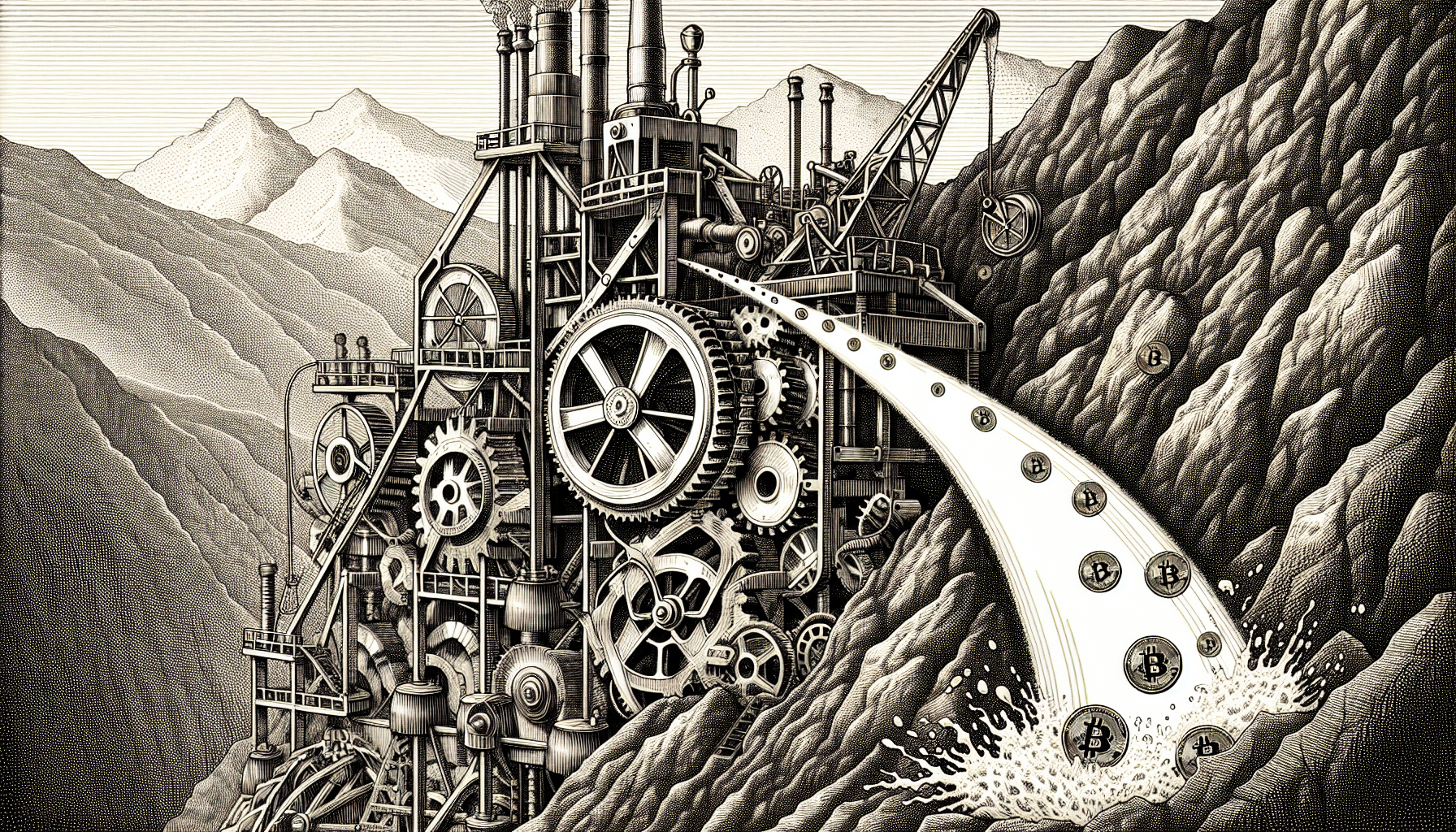
Hashprice, the revenue miners earn per unit of compute, sits at multi year lows. About $23.9 per petahash. That's brutal. Smaller operations are getting squeezed out. But the big players? They're doubling down.
The UAE is sitting on $344 million in unrealized mining profits. They've got cheap energy and long time horizons. Well capitalized miners in Texas and the Nordic countries are in the same boat. They can afford to mine at a loss for months because they're betting on the next move up.
And then there's the AI pivot. Bitfarms just dropped "bitcoin" from its name entirely. Riot Platforms is getting pressure from activist investors to expand into AI data centers. These companies realized they're sitting on something more valuable than bitcoin mining rigs. They've got massive power contracts and cooling infrastructure that AI companies are desperate for.
So mining hashrate recovers because the serious players stay, the pivot players find a second revenue stream, and the network keeps getting stronger regardless of what the price does.
GEOPOLITICS ARE ADDING PRESSURE
As if bitcoin didn't have enough problems, U.S. Iran tensions flared up again this week. Trump gave Iran 10 to 15 days to come to the table on a nuclear deal while American forces built up in the region. Gold jumped to nearly $5,000 an ounce on the news.
Bitcoin used to rally on geopolitical fear. It doesn't anymore. Or at least, it hasn't this cycle. The "digital gold" narrative took a beating when institutional money started treating BTC like a tech stock instead of a safe haven. When the Fed minutes came out with a more hawkish tone this week, bitcoin sold off right alongside equities.
That's not what bitcoin maximalists wanted to hear. But it's the reality of a market dominated by ETF flows and institutional positioning rather than cypherpunk ideology.
WHERE'S THE FLOOR?
I think we're close to one. Not because of any single indicator, but because of how many things are lining up.
The Checkonchain data shows bitcoin's current year to date performance at 0.77 on its cyclical index. In typical down years, this reading averages 0.84 at the 50 day mark. We're already below the average bear case.
K33 Research has compared current conditions to the late stages of the 2022 bear market. That grinding, sideways period where everyone gave up right before the recovery started. ETF outflows are extreme but slowing. Funding rates have flipped positive on Bybit and Hyperliquid. Open interest rose to $15.8 billion, suggesting traders are repositioning rather than running away.
The $72,000 level is the one to watch. If bitcoin can reclaim that, it breaks the pattern of lower highs and lower lows that's been in place since October. Below that, $60,000 is the nightmare scenario where ETF holders might capitulate en masse.
WHAT I'M WATCHING
Three things matter more than price right now.
First, mining difficulty. If it stays elevated through the next adjustment, that's miners voting with their wallets that they expect higher prices. Second, ETF flows. We need to see the bleeding slow down or reverse. One positive week would change the conversation entirely. Third, the Fed. If inflation data cooperates and rate cut expectations come back, risk assets including bitcoin get a tailwind.
The worst start to a year doesn't have to mean the worst finish. Bitcoin dropped 50% from its 2013 highs before rallying 10x. It cratered to $3,200 in late 2018 before the 2019 recovery. Even the 2022 bottom at $15,500 was followed by the run to $126,500.
History doesn't repeat but it rhymes. And right now, the miners are humming a pretty familiar tune.
Related Articles
Bitcoin's $60K Crash Wasn't Random. Here's Who Actually Caused It.
Last week, Bitcoin fell off a cliff. From $77,000 to $60,000 in three days. Billions evaporated. Twitter was full of "I told you so" posts and panic threads. But most people missed what actually happened. This wasn't just selling pressure from scared retail traders. The crash had invisible architects. And understanding who they are changes how you think about what happens next. THE INVISIBLE HANDS When Bitcoin dropped below $75,000 on Tuesday, something mechanical kicked in. Options market m
Bitcoin's Five Week Losing Streak and the $40,000 Put Nobody Wants to Discuss
Bitcoin just posted something it hasn't done since 2022. Five straight weeks of losses. Down over 50% from its October high, sitting around $66,000, and the options market is telling a story that should make everyone pay attention.

Institutions Won't Stop Buying Crypto. Retail Investors Can't Stop Selling. Who's Right?
Bitcoin is sitting at $68,000. Down 21% on the year. The Fear and Greed Index reads 41. Memecoins are bleeding. Retail traders are panic selling into every bounce. And yet, right now, some of the biggest money in the world is quietly backing up the truck. Strategy just bought another $168 million in bitcoin. BitMine dropped $90 million on ethereum in a single week. An Italian bank with $900 billion in assets just disclosed $100 million in bitcoin ETF holdings. These aren't dumb money moves. Th