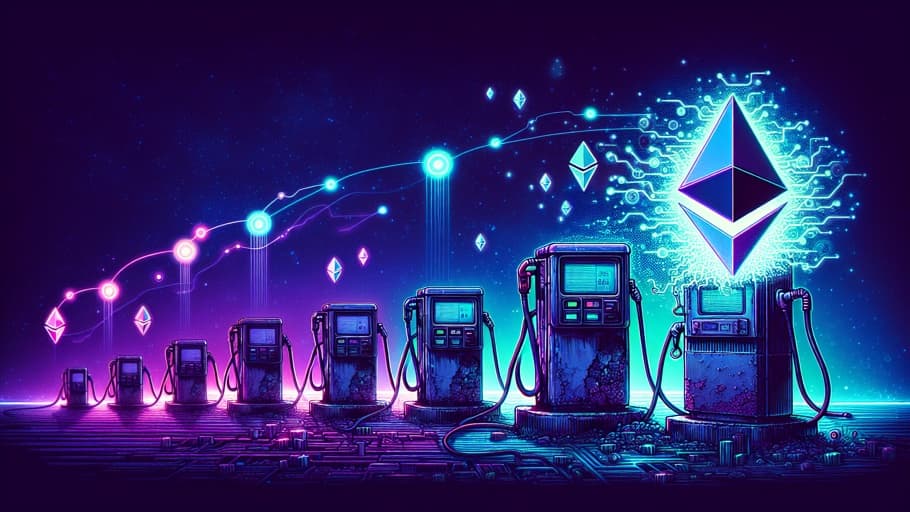
Vitalik's Latest Proposal Would Change Everything About Ethereum Gas
Vitalik Buterin has a habit of dropping proposals that sound crazy until they don't. EIP-1559 sounded crazy. It worked. The Merge sounded impossible. It happened. Blob transactions via EIP-4844 seemed premature. Now every L2 uses them.
His latest batch of ideas? They could change how Ethereum gas fundamentally works. And given his track record, they're worth taking seriously.
The Problem He's Trying to Solve
Ethereum has a gas problem. Not the "gas is too expensive" problem of 2021. The opposite problem.
Since EIP-4844 and the L2 migration, Ethereum L1 is processing fewer user transactions than it used to. Most activity has moved to Base, Arbitrum, Optimism, and other L2s. L1 gas prices have dropped to single digits in gwei during normal periods. Sometimes below 5 gwei.
Low gas prices mean less ETH is burned through EIP-1559. Less burning means more ETH inflation. The "ultrasound money" thesis, which depended on more ETH being burned than issued, is underwater. Ethereum is currently inflationary.
At the same time, the gas mechanism hasn't kept up with how the network is actually used. The original gas model was designed for a world where users interact directly with L1. In the new reality, L2 rollups are the primary users of L1 block space, and they use it very differently than individual human users.
What Vitalik Is Proposing
Vitalik has floated several interconnected ideas in recent months. Not all of them are formal EIPs yet, but they signal where his thinking is heading:
Multidimensional gas. Instead of one gas metric that covers everything, Ethereum could have separate gas prices for computation, storage, and data availability. This would let the network price different resources more accurately. Right now, a storage-heavy transaction and a compute-heavy transaction pay the same type of gas, even though they impose different costs on the network.
Higher blob targets. This sounds counterintuitive given that blob fees are already near zero, but increasing the blob target would signal confidence in L2 growth and actually change the dynamics of blob pricing. The idea is to be proactive rather than reactive as L2 demand grows.
Account abstraction improvements. Native account abstraction (EIP-7702 and related proposals) would let smart contract wallets pay gas in any token, sponsor gas for users, and batch transactions. This doesn't change gas economics directly but changes how users experience gas, potentially making L1 more accessible again.
State expiry and statelessness. These long-discussed ideas would reduce the cost of maintaining Ethereum's state, which is currently growing without bound. By letting old, unused state "expire" and only requiring validators to maintain recent state, the network could handle more throughput without increasing hardware requirements.
Why This Matters for ETH's Value
The gas mechanism is directly tied to ETH's value. EIP-1559 made ETH a productive asset. When gas prices are high, ETH gets burned, reducing supply. When gas prices are low (like now), the burning slows, and ETH becomes inflationary.
If Vitalik's proposals increase L1 activity (through account abstraction making L1 more user-friendly) or increase blob demand (through higher targets attracting more L2 activity), they could reignite the burn mechanism. More burn means less supply growth means better tokenomics for ETH holders.
But there's a tension. Some proposals (like increasing blob targets) would make L2s even cheaper in the short term, potentially reducing blob fees further. Vitalik is clearly prioritizing ecosystem growth over short-term fee extraction, betting that a larger ecosystem will eventually generate more total fees even at lower per-unit prices.
The Community Divide
Not everyone is on board. There's a growing rift in the Ethereum community between two camps:
Camp A: "Scale first, monetize later." This camp, which includes Vitalik, believes Ethereum should focus on being the best settlement layer and let L2s grow as fast as possible. Value accrual to ETH will follow organically as the ecosystem gets big enough.
Camp B: "Protect ETH economics now." This camp argues that Ethereum is giving away too much value to L2s. They want higher blob fees, more L1 activity, and mechanisms to ensure ETH captures value from the ecosystem it secures.
The debate is real and heated. A Fed economist recently called crypto "utterly useless" and dismissed stablecoins as "buzzword salad." Meanwhile, Ethereum's own community can't agree on how to make its native token valuable. That's not a great look.
The Account Abstraction Wildcard
Of all the proposals, account abstraction might have the biggest practical impact.
Right now, using Ethereum L1 is awful for normal people. You need ETH for gas. You need to understand nonces, gas limits, and priority fees. A single wrong click can cost real money. This is why everyone moved to L2s, where fees are invisible and wallets are simpler.
True account abstraction would let users pay gas in stablecoins, have their gas sponsored by applications, and use smart contract wallets that can do things like social recovery, spending limits, and session keys.
If L1 becomes as easy to use as an L2, some activity might migrate back. That would directly increase gas prices, increase burns, and improve ETH's economic model. It's the one proposal that could simultaneously improve user experience AND improve tokenomics.
Timing Matters
Ethereum's development process is slow. The Merge took years. EIP-4844 took over a year from proposal to deployment. Even if Vitalik's latest ideas are accepted by the community, implementation is a multi-year process.
The next major Ethereum upgrade, Pectra, is already being finalized with a relatively conservative set of EIPs. The more radical gas changes would likely target the upgrade after that, potentially in 2027.
That's a long time. In crypto, a lot happens in two years. ETH could continue losing ground to BTC and SOL while waiting for these improvements. The market might not be patient enough for Ethereum's deliberate approach.
My Take
Vitalik's proposals are directionally correct. Ethereum needs to evolve its gas model for the L2-centric world it's building. The current system, designed for direct L1 interaction, doesn't work well in a world where L2s are the primary users.
The risk is timing. Ethereum's governance process is slow, and the market isn't patient. ETH has been underperforming because its economics don't work well right now, and "they'll fix it in two years" isn't a compelling investment pitch.
But if you're thinking on a five-year horizon, these proposals make Ethereum more efficient, more user-friendly, and eventually better at capturing value from its growing L2 ecosystem. Vitalik has been right about the big calls before. I wouldn't bet against him on this one.
The question is whether ETH holders can afford to wait.
Related Articles
An AI Wrote the Code That Just Drained $1.8 Million From a DeFi Protocol
A pricing glitch that lasted only minutes left DeFi lender Moonwell with $1.8 million in bad debt. The faulty code was co-authored by Claude Opus 4.6, an AI coding assistant. We've officially entered the era of AI-generated exploits.
Institutions Won't Stop Buying Crypto. Retail Investors Can't Stop Selling. Who's Right?
Bitcoin is sitting at $68,000. Down 21% on the year. The Fear and Greed Index reads 41. Memecoins are bleeding. Retail traders are panic selling into every bounce. And yet, right now, some of the biggest money in the world is quietly backing up the truck. Strategy just bought another $168 million in bitcoin. BitMine dropped $90 million on ethereum in a single week. An Italian bank with $900 billion in assets just disclosed $100 million in bitcoin ETF holdings. These aren't dumb money moves. Th
Why Ethereum Gas Fees Will Never Go Away
Ethereum has spent years trying to fix gas fees. They're lower now but they'll never be zero. Here's why that's by design and what it means for users.