
Bitcoin's Halving Effect Is Fading, and That's Not Necessarily Bad
Every four years, Bitcoin's block reward gets cut in half. It happened in 2012, 2016, 2020, and most recently in April 2024. Each time, the narrative was the same: supply shock leads to price explosion leads to euphoric bull run leads to devastating crash.
The pattern held for three cycles. People built entire investment theses around it. PlanB's stock-to-flow model became gospel. The four-year cycle was treated as a law of nature.
Then 2024 happened. And the playbook started to crack.
What Actually Happened Post-Halving
The April 2024 halving reduced the block reward from 6.25 BTC to 3.125 BTC. In previous cycles, the biggest price appreciation came 12-18 months after the halving event. That would put the expected peak somewhere around mid to late 2025.
But here we are in February 2026, and Bitcoin's at roughly $68,000. It did hit new all-time highs above $73,000 in early 2024, actually before the halving. It touched highs again later in the year. But the "blow-off top" that everyone was waiting for? The 10x rally from the pre-halving price? It hasn't materialized.
The move has been more gradual, more institutional, and frankly, more boring than previous cycles. And that's confusing a lot of people who were counting on the halving to deliver another 2017 or 2021-style mania.
Why the Halving Matters Less Each Time
The math is straightforward and undeniable.
In 2012, the halving cut new supply from 50 BTC per block to 25. That was a massive reduction relative to total circulating supply. In 2016, it went from 25 to 12.5. In 2020, from 12.5 to 6.25. Each time, the absolute supply reduction was smaller.
The 2024 halving reduced daily new issuance from about 900 BTC per day to 450. That's roughly $30 million in daily new supply at current prices. Sounds like a lot until you realize that Bitcoin ETFs alone sometimes absorb that in a single hour of trading.
When BlackRock can buy 10,000 BTC in a week through IBIT, the difference between 900 and 450 BTC of new daily supply is noise. The demand side has completely overwhelmed the supply side dynamics that made previous halvings so impactful.
The Supply Shock Was Front-Run
Here's the other thing nobody wants to admit. The halving was the most predicted, most anticipated event in Bitcoin's history. Every crypto fund, every retail trader, every financial advisor who'd ever heard of Bitcoin knew it was coming. The date was known years in advance.
Markets are reasonably efficient. When millions of participants know that a supply reduction is coming on a specific date, they buy ahead of it. That buying pulls forward the price appreciation. By the time the halving actually happens, the "supply shock" is already priced in.
This is exactly what we saw. Bitcoin rallied from $25,000 to over $73,000 in the months leading up to the halving. Then it mostly consolidated afterward. The information was in the price before the event occurred.
The Cycle Is Stretching
I think the four-year cycle is still alive, but it's stretching and flattening. Instead of sharp parabolic moves followed by 80% crashes, we're getting longer, slower appreciation with shallower drawdowns.
The 2022 bear market saw Bitcoin drop about 77% from its peak. Painful, but the recovery was faster than previous cycles. And the drawdowns within this cycle have been notably milder, often 20-30% corrections instead of the 50%+ plunges of previous eras.
Why? Institutional involvement. When your holder base is pension funds, ETFs, and corporate treasuries, they don't panic sell on a 20% dip. They rebalance. Some of them buy more. This creates structural buying pressure during drawdowns that didn't exist in previous cycles.
What Replaces the Halving Narrative?
If the halving becomes less important as a price driver, what takes its place? I think three things:
Institutional adoption curves. The percentage of financial advisors recommending Bitcoin. The number of sovereign wealth funds with allocations. The growth of Bitcoin ETF AUM. These are the demand-side metrics that matter now, and they operate on their own timeline, not a four-year cycle.
Regulatory milestones. SEC approvals. Stablecoin legislation. Banking custody rules. Each of these unlocks a new pool of capital. They don't follow a predictable schedule, but they have outsized impact when they happen.
Macro cycles. Global liquidity, dollar strength, geopolitical events. Bitcoin is increasingly correlated with macro factors, and those operate on irregular cycles driven by central bank policy, fiscal spending, and geopolitical events.
Why Boring Is Good
This is the part where I'll lose the degens, but hear me out.
A Bitcoin that grinds up 30-50% per year with occasional 20-30% corrections is more valuable than a Bitcoin that does 10x and then crashes 85%. The first pattern attracts permanent capital. The second attracts speculation.
Pension funds can't invest in an asset that routinely drops 80%. Corporate treasuries can't justify it to shareholders. Financial advisors can't recommend it to retirees. But an asset with equity-like returns and manageable volatility? That's something everyone can own.
The fading halving effect is a sign that Bitcoin is maturing from a speculative vehicle into a legitimate financial asset. The parabolic manias were exciting. They were also what kept Bitcoin from being taken seriously by the people who control the most capital.
For Miners, the Story Is Different
The halving might matter less for price, but it matters enormously for miners. Their revenue just got cut in half while their costs stayed the same. Electricity doesn't get cheaper because Satoshi's code said so.
This is driving massive consolidation in the mining industry. Small and mid-sized operators are getting squeezed out. The survivors are the ones with the cheapest power, the most efficient hardware, and increasingly, the ability to pivot revenue streams toward AI data center services (more on that in another piece).
Mining difficulty has actually hit new all-time highs even after the halving, which means the network is more secure than ever. The miners that survived are more committed, better capitalized, and running tighter operations. That's healthy for the network even if it's painful for individual miners.
The Bottom Line
The halving cycle isn't dead. It's just becoming one factor among many instead of THE factor. Bitcoin's price dynamics are now driven by a complex mix of institutional flows, regulatory developments, macro conditions, and yes, supply dynamics.
If you're still planning your entire strategy around four-year halving cycles, you might want to update your model. The market has evolved. Your framework should too.
And honestly? A Bitcoin that doesn't need a supply shock to appreciate is a Bitcoin that's finally growing up.
Related Articles

Bitcoin's Worst Start to a Year Ever. Here's Why Miners Don't Care.
Fifty days into 2026 and bitcoin is down 23%. That's the worst start to any year in its history. And yet mining difficulty just jumped 15%, the biggest single increase since 2021. Miners are coming back hard even as the price bleeds. So what gives?

Why Bitcoin Miners Are Pivoting to AI and What It Means for the Network
Bitcoin miners are converting their facilities into AI data centers. The economics make sense. But what happens to Bitcoin's hash rate and security when miners chase a different revenue stream?
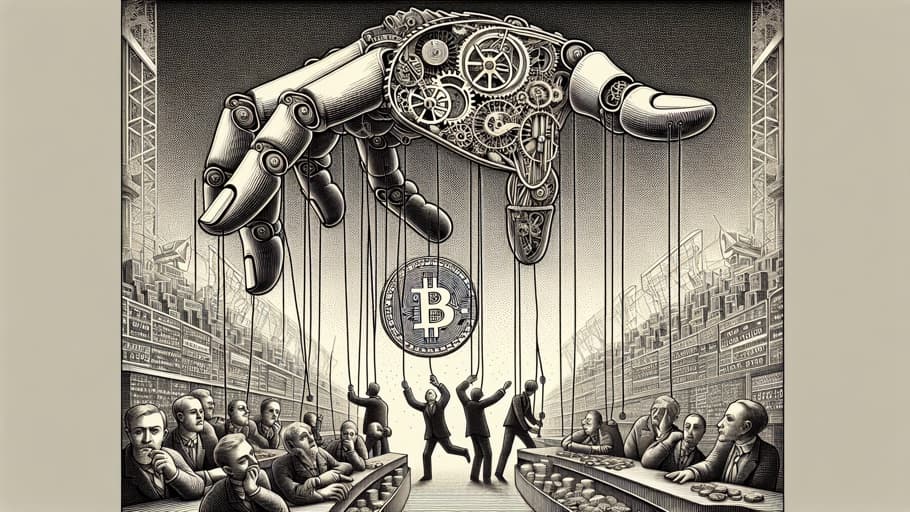
Bitcoin's $60K Crash Wasn't Random. Here's Who Actually Caused It.
Last week, Bitcoin fell off a cliff. From $77,000 to $60,000 in three days. Billions evaporated. Twitter was full of "I told you so" posts and panic threads. But most people missed what actually happened. This wasn't just selling pressure from scared retail traders. The crash had invisible architects. And understanding who they are changes how you think about what happens next. THE INVISIBLE HANDS When Bitcoin dropped below $75,000 on Tuesday, something mechanical kicked in. Options market m