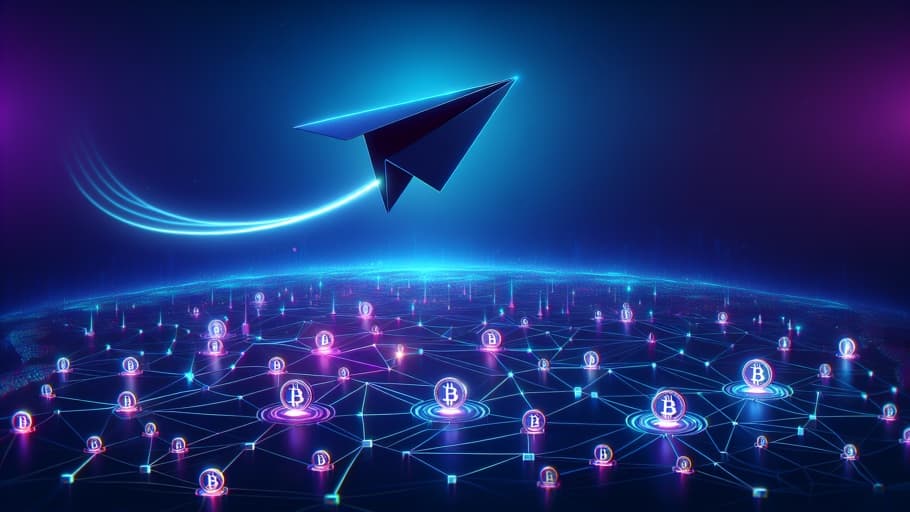
TON and Telegram Have a Crypto Distribution Advantage Nobody Else Has
Every crypto project in existence has the same problem: getting users.
You can build the most technically impressive blockchain in the world, but if nobody uses it, the technology doesn't matter. Ethereum bootstrapped through the ICO boom. Solana bootstrapped through DeFi and memecoins. Most chains never bootstrapped at all and sit as ghost chains processing a few hundred transactions per day.
TON has a cheat code that no other blockchain has: Telegram.
900 million monthly active users. A built-in wallet. Mini apps that go viral within the messaging platform. And an audience that's already comfortable with digital payments.
That's not a blockchain trying to find users. That's users being handed a blockchain.
The Telegram Advantage
Let me be specific about why Telegram's distribution is so powerful.
It's already installed. You don't need to download a new app, create a new account, or learn a new interface. Telegram is on their phone. The wallet is inside Telegram. The mini apps are inside Telegram. Zero friction onboarding.
The audience is crypto-adjacent. Telegram has been the default messaging app for crypto communities for years. The overlap between Telegram users and people who are at least crypto-curious is massive. You're not trying to convince Instagram users to try blockchain. You're reaching people who are already in crypto group chats.
Mini apps create viral loops. Telegram mini apps, lightweight applications that run inside the messaging platform, can spread through groups and channels at absurd speed. A well-designed mini app can go from zero to millions of users in weeks because Telegram's social graph provides built-in distribution.
Payments are native. Telegram has been building payment infrastructure for years. Adding crypto payments on top of that existing system is an incremental step, not a radical shift.
What's Actually Happening on TON
The TON ecosystem has seen some genuinely impressive numbers.
Notcoin, a simple tap-to-earn game, onboarded over 35 million users in a few months. That's more users than most top-50 blockchains have ever seen. Hamster Kombat and similar mini apps pulled in tens of millions more.
TON wallet adoption has grown to tens of millions of addresses. Daily active users on TON-based mini apps regularly exceed what many established chains process.
The recently launched Fragment marketplace handles Telegram username auctions and anonymous number purchases using TON. This creates organic demand for the token that isn't dependent on speculation.
USDT on TON has been growing rapidly. Tether launched native USDT on TON, recognizing the opportunity. Stablecoin transfer volume on TON is a meaningful and growing number, driven by real peer-to-peer payments especially in markets like Russia, the Middle East, and Southeast Asia.
The Tap-to-Earn Trap
Now for the uncomfortable part.
Most of those 35 million Notcoin users? They tapped a button a lot, got some tokens, and left. The retention rates for tap-to-earn games are abysmal. Users show up for the airdrop, collect their tokens, sell them, and never come back.
This creates artificially inflated user metrics. A chain that had 35 million users for one week but 500,000 the next is fundamentally different from a chain with steady 500,000 daily users. The peak numbers make great headlines. The retention numbers tell the real story.
The TON ecosystem needs to evolve beyond gamified airdrops to genuine utility apps that keep users coming back. Payments, social features, DeFi, and commerce. If it stays in the tap-to-earn phase, the user numbers will evaporate along with the token incentives.
The Unique Geographic Angle
TON has something else that other chains don't: a massive user base in regions that are underserved by traditional financial infrastructure.
Telegram is the dominant messaging app in Russia, large parts of the Middle East, and Southeast Asia. Many users in these regions have limited access to banking, face capital controls, or live under currency instability.
For these users, a wallet inside their messaging app that holds USDT is genuinely revolutionary. Not in the crypto-bro "banking the unbanked" slogan way, but in the practical "I can now send money to my family without paying 10% in remittance fees" way.
This is organic demand for crypto payments that doesn't depend on speculation or yield farming. It's people using blockchain because it's better than the alternatives available to them.
TON the Token
Toncoin trades around... well, it fluctuates, but the market cap puts it in the upper echelon of crypto assets. The tokenomics include staking rewards for validators, payment fees, and consumption through various platform services.
The bull case is obvious: 900 million Telegram users represent the largest potential on-ramp in crypto. If even 5% of them become active TON users, that's 45 million wallets. The network effects from Telegram's social graph provide a moat that no other chain can replicate.
The bear case is also clear: Telegram can change its mind. The relationship between Telegram and TON is complicated. Originally developed by Telegram's founders, the TON blockchain was forced to separate from Telegram during SEC litigation. While the two are closely aligned, Telegram could theoretically integrate a different chain or deprioritize crypto entirely.
There's also the Durov factor. Telegram's founder Pavel Durov has had various run-ins with authorities. If Telegram faces regulatory pressure that forces it to remove crypto features, TON's distribution advantage evaporates overnight.
The Competition for App-Chain Distribution
TON isn't the only one playing the distribution game.
Base has Coinbase's 100+ million users. Coinbase's integration of Base into its app is the same playbook: put a blockchain inside an app people already use.
LINE (the messaging app dominant in Japan and Southeast Asia) has explored blockchain integration. WeChat has digital yuan. WhatsApp has Meta's payment experiments.
The race to become the blockchain of a messaging platform or social network is happening on multiple fronts. TON has the advantage of being the most crypto-native option, with the deepest integration and the most active ecosystem. But it's not the only contender.
What Needs to Happen
For TON to fulfill its potential, three things need to happen:
Real utility apps. Beyond tap-to-earn. Payments, commerce, social features, DeFi. Apps that people use because they're useful, not because they're giving away tokens. The peer-to-peer USDT payments use case is promising. More like that.
Developer ecosystem depth. TON uses a custom smart contract language (FunC/Tact) that most developers don't know. Growing the developer base requires better tooling, more documentation, and potentially compatibility layers with more common languages.
Regulatory navigation. Telegram operates globally, which means navigating a patchwork of regulations. Some countries will embrace crypto-integrated messaging. Others will ban it. TON's growth depends on Telegram maintaining its platform in the markets that matter most.
My Take
TON has the single best distribution advantage in all of crypto. No other blockchain has a 900-million-user messaging app putting a wallet in people's pockets.
But distribution alone isn't enough. You also need retention, utility, and a sustainable economic model. The tap-to-earn phase proved that TON can get users in the door. The next phase needs to prove it can keep them.
If TON converts even a small percentage of Telegram's user base into regular on-chain users, it becomes one of the most significant blockchains in the world. That's a big "if." But it's an "if" with better odds than most bets in crypto.
Related Articles
Bitcoin's Worst Start to a Year Ever. Here's Why Miners Don't Care.
Fifty days into 2026 and bitcoin is down 23%. That's the worst start to any year in its history. And yet mining difficulty just jumped 15%, the biggest single increase since 2021. Miners are coming back hard even as the price bleeds. So what gives?
An AI Wrote the Code That Just Drained $1.8 Million From a DeFi Protocol
A pricing glitch that lasted only minutes left DeFi lender Moonwell with $1.8 million in bad debt. The faulty code was co-authored by Claude Opus 4.6, an AI coding assistant. We've officially entered the era of AI-generated exploits.
Vitalik's Latest Proposal Would Change Everything About Ethereum Gas
Vitalik Buterin keeps pushing radical ideas for Ethereum's future. His latest proposals could fundamentally reshape how gas works, how L2s interact with L1, and what ETH is actually worth.